

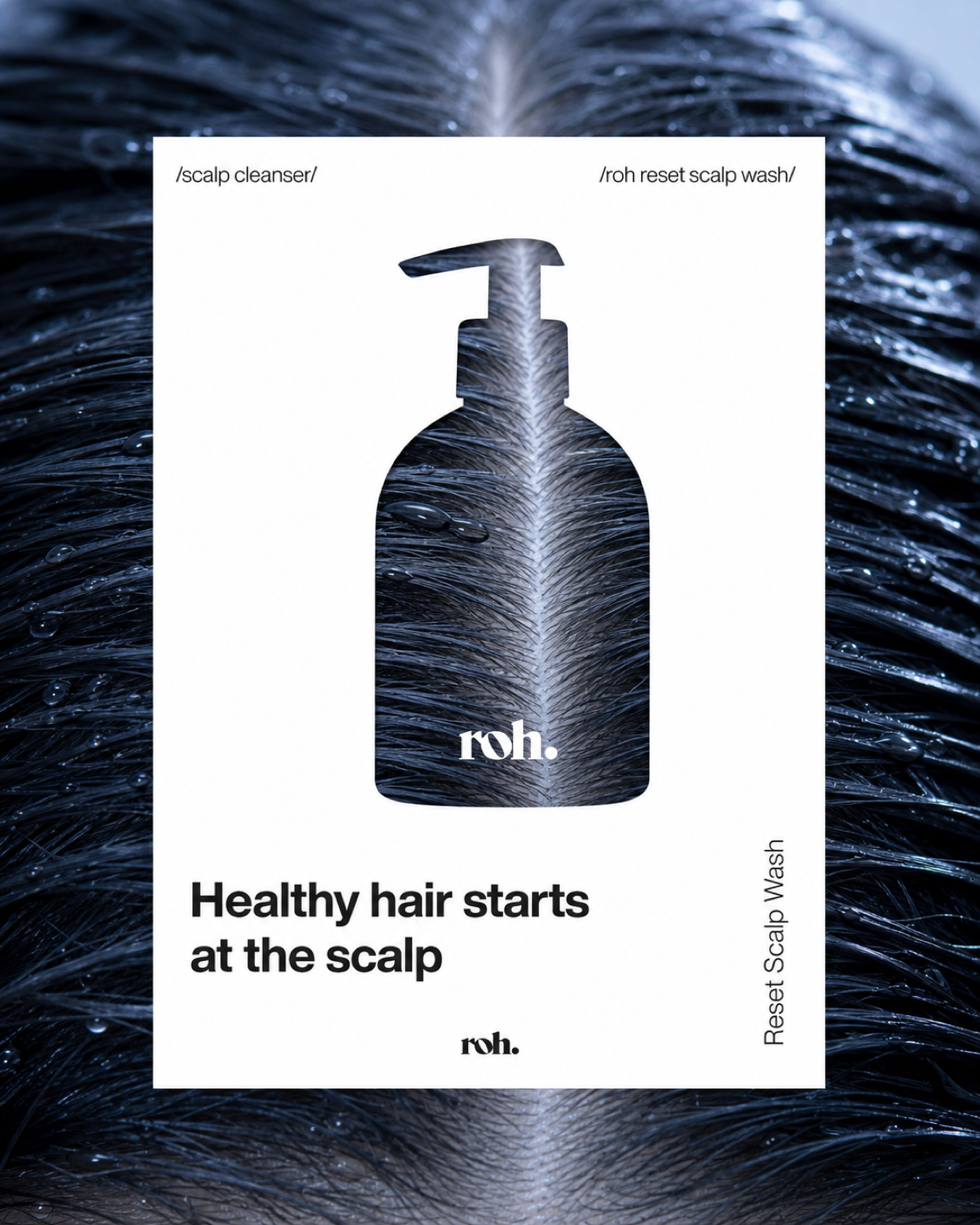
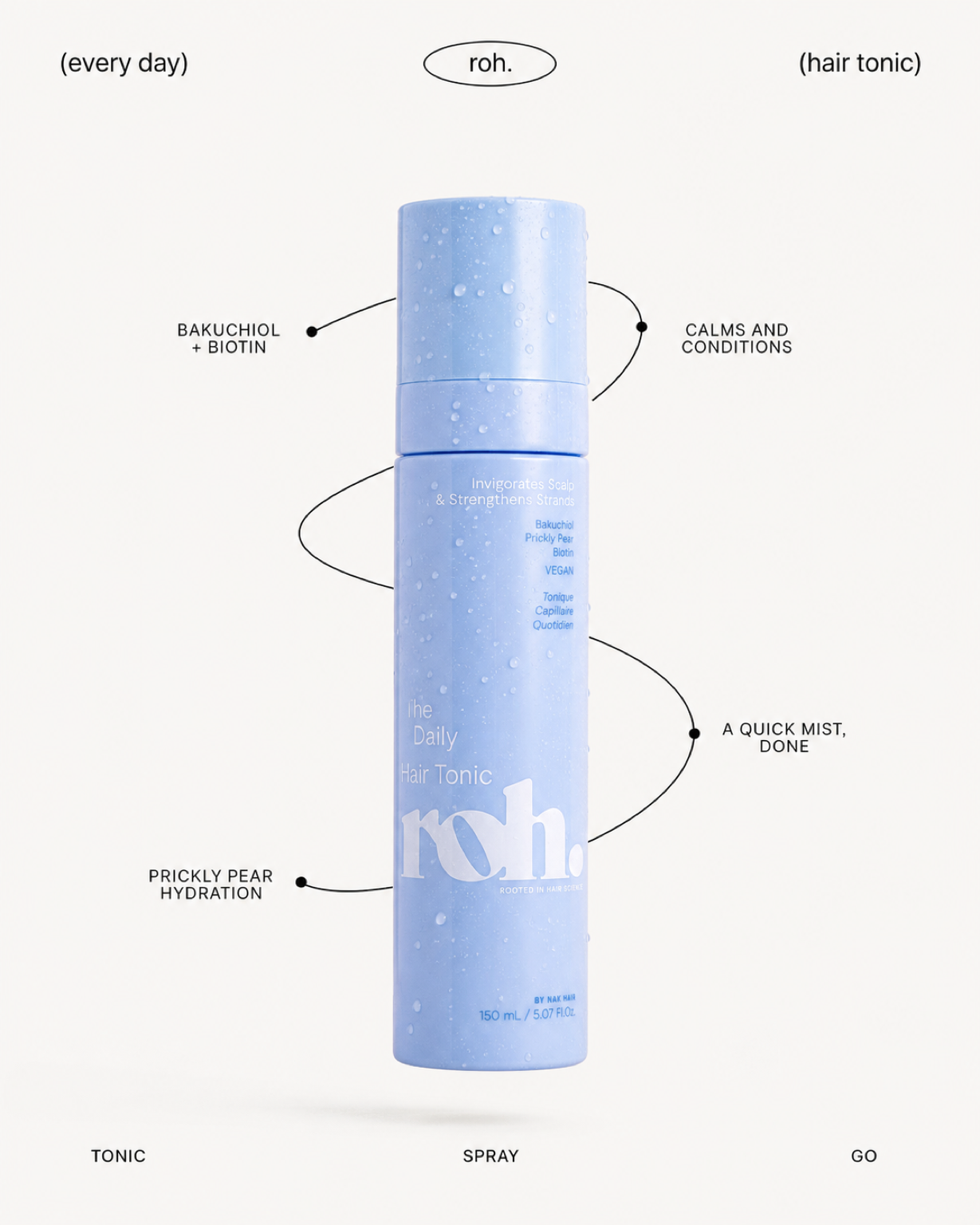
Two ads for the same scalp-care brand, ROH. One is a knockout poster: the bottle cut clean out of a white card, a macro of wet hair showing through the shape where the bottle should be, one line of copy underneath. The other is a product teardown: the tonic floating on an off-white ground, a single thin line weaving out to four labelled callouts. Side by side they obviously belong to the same brand. They do almost completely different jobs.
A format is a way of thinking, not a skin
The knockout poster sells on image and restraint. It asks you to feel something about clean hair and trust the one line it gives you. The teardown sells on information. It names the actives, shows how fast the product goes on, and answers the question a skeptic is actually holding. Same product, same brand philosophy, two entirely different readers.
Why you run both
You don't know which reader is scrolling. Someone who has been let down by three scalp products already will not be moved by a nice photograph. They want the ingredient list and they want it now. Someone tired of beauty ads overclaiming will scroll straight past a spec sheet but stop on a single confident image. You don't pick between them in advance. You run the spread and let the ad account tell you which doors people are walking through.
The system is what makes it a spread and not a mess
What holds the two ads together is set before either one is made: one type system, one ink colour, one periwinkle world, the lowercase roh. wordmark in the same position, sentence-case headlines, no exclamation marks. Those rules get decided once. After that the format can change every week and the brand never looks like it changed with it.
This is the part that gets skipped. It is faster to make one ad and then a different-looking second ad than it is to agree the system first. The cost just moves downstream, to the point where the feed is a row of executions that don't agree with each other and more formats only make the drift worse.
The test
Pull any two ads from a month of output. No labels, no logos enlarged, just the two frames next to each other. Do they obviously belong to the same brand? If yes, the system is real and you can be as varied as you like inside it: knockout poster, teardown, notification, spec panel, whatever the format of the week is. If no, you don't have a range problem, you have a system problem, and it needs fixing before the next batch goes out.